"Quiet on the Set. Cameras Rolling. And Action," the director calls out over a megaphone. Cars move through a busy intersection. Instead of stopping at the red light, stunt doubles for James Bond and the Bond girl race their car across the intersection and narrowly escape being hit by truck. I stand behind the camera cringing at the near crash yet thankful that no one was hurt filming the stunt.
 Through a GW connection to the producers of the James Bond film, GW Emergency Medicine residents were asked to be the doctors on set for the upcoming James Bond movie – Quantum of Solace. They needed us on location in Panama and Chile for two months, so six of us took turns rotating on set for 1 to2 weeks at a time. I went in early March 2007 for 10 days while filming in Colon, Panama.
 One word best describes the key factor for a successful stint as doctor on set for the next James Bond movie – preparation. I know it is not glamorous, especially considering you're working with famous actors, producers and directors, but being prepared for anything that came my way was the name of the game. This became even more critical not only because I was practicing in an austere environment in which the cast and crew were involved in stunts, handling heavy equipment, standing up on heights, and working in a warm tropical environment, but also because we were filming in Panama, a country with a different healthcare system from what I was used to in the United States.
Much of my time was spent making sure I was prepared if something were to occur. What would I do if one of the stunt devils was injured while crashing boats into each other? If they fell into the water, how would we get them out and immobilize them? How would we get them to the hospital? If an ambulance was standing by, where should it be parked to be close enough to the scene, but out of the camera's shot? If in a remote area, would we need to air-lift the patient via helicopter? Which hospital would we go to? Which hospitals in the area did we have agreements with? Since most of the crew spoke English only, who would translate? What medications or medical gear did I need to have on hand?
 These contingencies were accounted for as I was armed with a large medical bag with many commonly used medications and resuscitation meds, intubation equipment, a defibrillator, ambulances on stand-by and when we filmed in remote locations, a med-evac helicopter. Moreover I also had a medical action plan and list of hospitals that we had researched, visited and had made contact with.
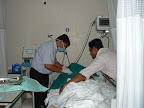
Luckily there were no major accidents while I was on set and much of my time was spent treating urgent care complaints such as heat-related illnesses, diarrheal illnesses, urinary tract infections, back pain and falls with minor injuries. The things I was asked for the most were sunscreen, hand sanitizer, bugspray, Gatorade and oral rehydration packets and over the counter medications such as NSAIDS and anti-histamines.
 Even so, the cast and crew, most of which were British, were thankful and felt reassured that they had both an American doctor and British nurse on set to address any medical issues that came up. Working on set with the same group of people long-term allowed us to follow-up on patients readily, something that working in the ED doesn't usually allow.
In between caring for patients, I spent time watching the filming and talking with cast and crew members It was a unique experience and a once in a lifetime chance to get an insider's glimpse into the making of James Bond movie. Working on the set in Panama was a great experience and brought together elements of international, operational and event emergency medicine.

Archana Reddy, PGY-4